
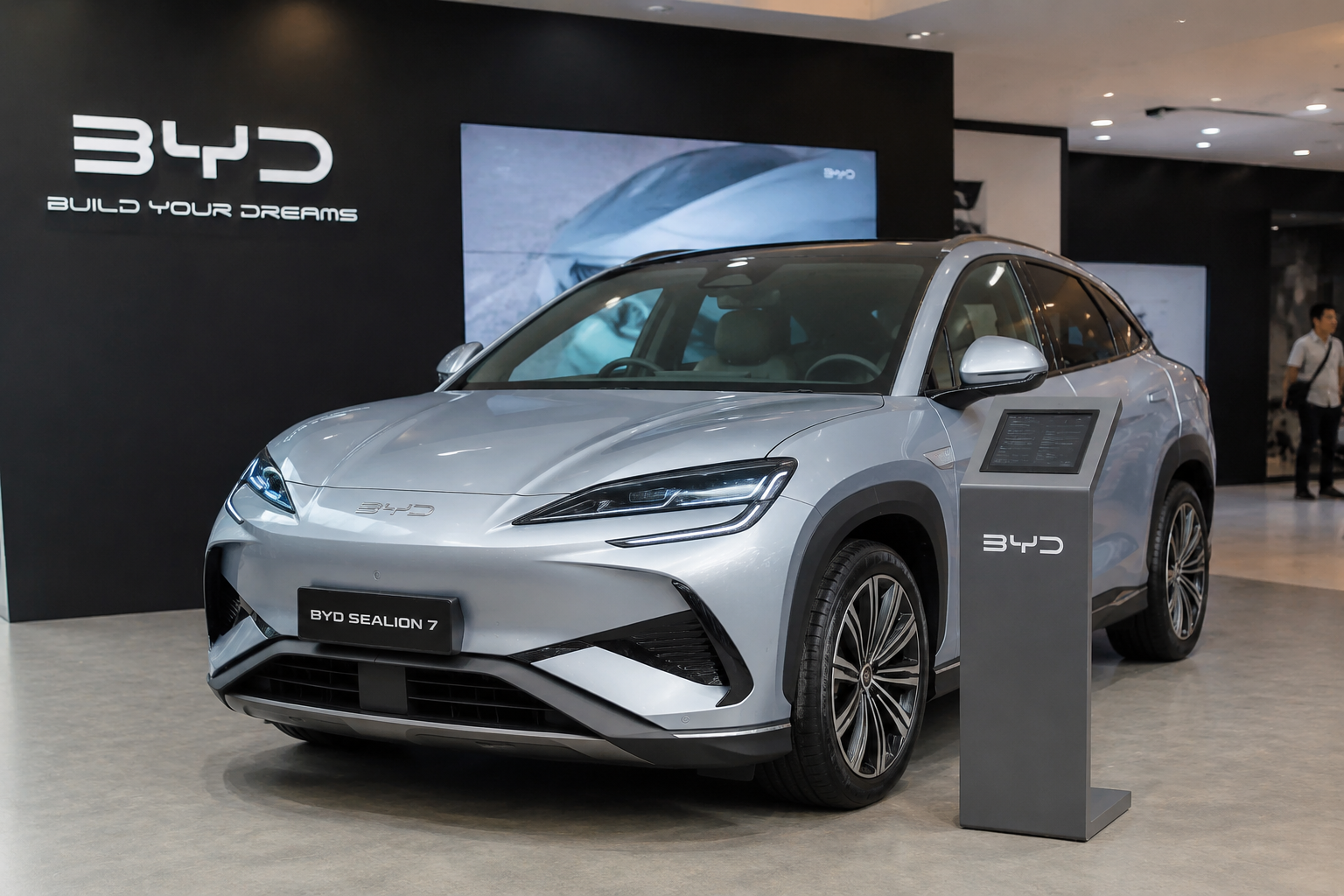
BYD Chairman Wang Chuanfu has said the Chinese electric vehicle maker aims to become the world’s largest automaker within the next five years, outlining an ambitious growth target as the company faces slowing domestic demand and pressure on its share price.
Speaking at BYD’s annual shareholder meeting at the company’s headquarters in Shenzhen on Tuesday, Wang sought to reassure investors following a sharp decline in the company’s market value over the past year.
According to a report by Shanghai Securities News, Wang addressed nearly 1,000 shareholders and discussed the company’s strategy for future growth.
A key focus, he said, would be increasing production of BYD’s second-generation Blade Battery, which he identified as a major growth bottleneck this year.
Ambitious global growth plans
During the meeting, Wang expressed confidence in BYD’s ability to become the world’s leading automaker by sales volume.
“BYD will truly become the No. 1 automaker globally in terms of scale in five years,” Wang said.
He attributed the company’s long-term growth prospects to its expanding export business and ongoing technological advancements.
Wang highlighted improvements in battery technology and fast-charging capabilities as factors that could help drive demand both in China and overseas.
On Wednesday, BYD confirmed that Wang had stated his ambition for the company to become the world’s leading automaker.
However, the company did not provide further details regarding the discussions held during the shareholder meeting.
Share price under pressure
The chairman’s remarks come at a challenging time for BYD.
The company has struggled to regain momentum after intensified competition in China’s automotive market affected domestic sales over the past year.
Investor concerns have also weighed on the stock.
BYD’s Hong Kong-listed shares have fallen more than 45% from their peak over the past year, while its Shenzhen-listed shares have declined 33% during the same period.
On Wednesday morning, BYD shares continued to face pressure, falling 4.3% in Hong Kong and 1.6% in Shenzhen.
Export growth offsets domestic weakness
While domestic demand remains subdued, BYD’s overseas business has delivered stronger results.
The company reported that exports between January and May increased 65% compared with the same period a year earlier.
Brazil, Britain, and Australia emerged as the company’s largest export markets, supported by relatively low trade barriers.
BYD’s international sales also showed signs of recovery in April.
Overseas vehicle sales rose 35% year-on-year to 130,000 units, reversing a decline of 20.5% recorded in March.
The rebound underscores the growing importance of overseas markets as BYD seeks to offset slowing demand in China.
Domestic sales remain a challenge
Despite improving export performance, BYD continues to face difficulties in its home market.
Overall vehicle deliveries between January and May declined by more than 20%, reflecting persistent weakness in domestic demand.
The company also reported another monthly decline in vehicle sales, extending what has become its longest recorded downturn.
The decline marked the eighth consecutive month of falling sales.
The current streak surpasses the company’s previous longest downturn of six months, which followed the withdrawal of government electric vehicle subsidies that ended in December 2019.
In a separate update, BYD reported vehicle sales of 300,222 units in the previous month, down 20.5% from a year earlier.
Although the decline was less severe than February’s 41.1% drop, the figures continued to point to weak consumer demand in the domestic market.
Long road to the top
Achieving Wang’s goal would require BYD to surpass Toyota, which sold more than twice as many vehicles as BYD in 2025.
BYD ranked sixth globally in 2025 with 4.6 million vehicles sold.
While the company has made significant gains in international markets, particularly in regions where Chinese automakers have expanded rapidly, it still faces a substantial gap to the industry’s largest manufacturers.
For now, BYD’s growth strategy appears to rest on a combination of stronger exports, technological innovation, and increased battery production as it seeks to navigate a challenging domestic market while pursuing global leadership.
The post BYD chairman projects global leadership in five years amid market challenges appeared first on Invezz