
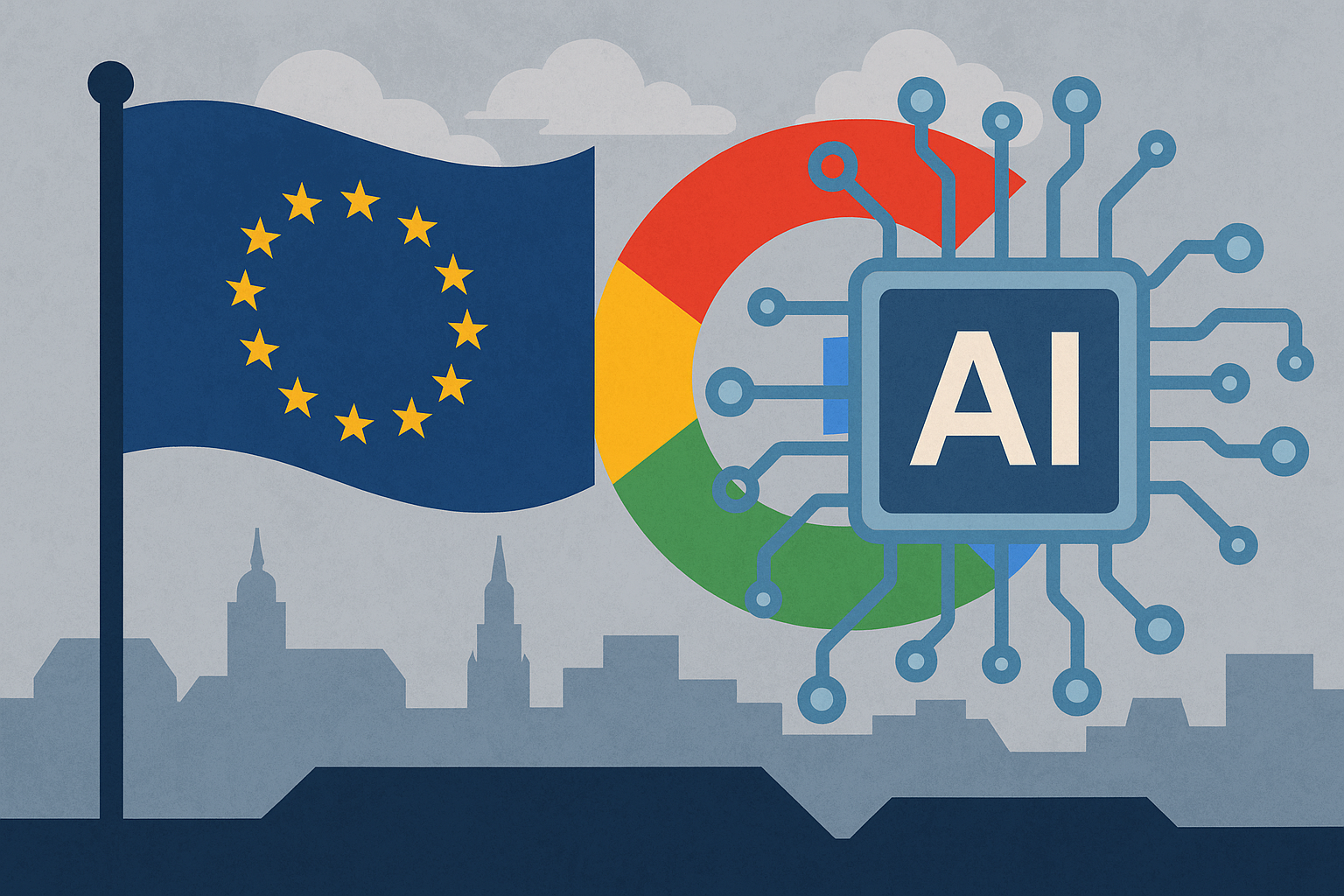
The European Commission has opened a new investigation into Google, turning its attention to how the company’s artificial intelligence services may affect competition across the digital economy.
Regulators in Brussels want to understand whether Google has shaped the AI landscape in ways that make it harder for rivals to compete and whether publishers’ material is being used to power AI features without adequate compensation.
The move adds to a long timeline of European action against the company and deepens tensions with the US, where recent EU penalties have drawn strong political criticism.
EU scrutiny shifts toward AI practices
Officials will review how Alphabet Inc. deploys AI tools across its products and whether that creates unfair conditions for content creators.
The Commission is studying AI Overviews and AI Mode to determine how publisher information is gathered, how it is displayed to users and whether payments are appropriate when web content contributes to these systems.
The inquiry also aims to assess whether the design of these features has influenced market access for competing AI developers or limited visibility for independent publishers.
Investigation follows earlier penalties
The fresh probe comes on the heels of a September decision that imposed a penalty of almost €3 billion over allegations that Google steered advertisers toward its own technology services.
That ruling triggered a strong reaction from US President Donald Trump, who called the fine discriminatory on social media.
Tensions have been rising as US officials highlight more than €9.5 billion in previous EU fines against Google and a separate requirement for Apple to repay €13 billion in taxes to Ireland.
Trump has warned that he may impose additional tariffs and tighten export controls on advanced technology unless the EU changes its regulatory stance.
Washington has also said it will not ease 50% tariffs on steel and aluminium products until progress is made.
Long history of regulatory battles
Google has faced several major EU sanctions over the past decade.
These include a €4.13 billion penalty related to Android practices, a €2.42 billion decision concerning shopping search behaviour, and a €1.49 billion AdSense ruling that was annulled last year.
Alongside these actions, Google is now subject to the Digital Markets Act, which came into effect in 2023 and places extra responsibilities on large platforms that hold significant market power.
The legislation forms part of a wider European effort to keep the tech sector competitive and transparent.
What happens next in Brussels
Under EU antitrust rules, regulators can ask companies to halt practices they consider harmful, although such demands can be challenged in Luxembourg courts.
The EU’s rulebook allows penalties of up to 10% of a company’s global annual revenue.
While fines rarely reach that threshold, the possibility strengthens the pressure on companies under investigation.
Google must now present solutions that address concerns about how its AI systems operate and how they interact with publishers, users, and competitors across Europe.
The post Brussels launches new EU challenge to Google’s expanding AI influence appeared first on Invezz